Showing posts with label drama. Show all posts

Saturday, May 4, 2019

Dead Poets Society (1989)

Oh Captain my captain


By Paul Birch 

Peter Weir had a great 1980s. This could be the understatement of the year. In the same decade he made Gallipoli, The year of living dangerously, Witness, The Mosquito Coast, and a little film called Dead Poets Society. That’s not a bad run, and few would have thought that Dead Poets would be the film that would define him. When you look at the film, and his resume, you can see why he was tailor-made to make this. A mixture of seasoned actors, and young up and comers…check. A dramatic tale that can only be told in the way someone like Weir can tell… check. Surrounding yourself with experts in nearly every field…absolutely check.
Back to the film though.


Set in 1959, Dead Poets Society is a simple story. There is really not much that happens. I mean at all. I’m not saying this is a bad thing, far from it. We get to live with the students in the fictional boarding school. We breath the air they breath, and by the end we cry the same tears. The film starts with the beginning of a school term. Parents fuss over students, with the slightest hint of the stresses that lie ahead. The soundtrack is only bagpipes. We all know the epic soundtrack by Maurice Jarre, but music is surprisingly lacking. The first small background track doesn’t even come into play until the 18th minute. When that music does come in though, it blows you away. Back to the film though.

We first meet Neil Perry (Robert Sean Leonard) and Todd Anderson (Ethan Hawke) as respective parents are laying out the ground rules for the year ahead. Todd, quiet and shy, Neil, outgoing and dramatic. They instantly bond as new roommates, with Todd bringing him into the crowd of young scholars. The group itself all manage to be different enough, with a lot of work being done outside of the script. Peter Weir is well known to let his actors improvise and change things. One of the most poignant moments at the end was not in the original script (will come to that later) and he will let the camera role after a take is finished just to see what will happen. 


One of the best moments in the film is when Neil and Todd are talking alone. It is Todds birthday, and the only present he has been given is the same present his parents gave him the year before. The original script had a very different, overly emotional conversation. The genius of Peter though, is that he lets his actors change things. Todd would never be that emotional, it is not how the character works. PEter Weir agreed with this, and the scene was changed to what we see now and the present being thrown from the roof.


As great as the young stars are (Josh Charles, Dylan Kussman et al) it I Robin Williams who absolutely steals every scene magnificently. Nowadays we hear how it was such a brave choice, but if you look at his cinematography, you’ll see he was made for this. Good Morning Vietnam and The World according to Garp are both hilarious yet dramatic. Robin Williams has this skill, a skill skill that almost no one else on the planet has ever had, to make anything funny. The infamous wife farting monologue in Goodwill Hunting being the best example. 

In Dead Poets Society, Robin is allowed to let loose every now and then, some great impressions and you can see he goes off script a lot. What he does though, is know how to rein himself in. He always has that twinkle in his eye, where you know that anything could happen, but he also has more humanity in a smile than most actors could muster in a lifetime. Interesting fact, Liam Neeson was always first choice to play the role of Mr Keating, only changing when Peter Weir came on board. At one point, Dustin Hoffman was going to star and direct. Both would have worked, but I think we got the right choice in the end.

Back to the film…


There are many different stories going on at the same time, but the main one is about the growth of Todd and Neil. This is a true coming of age story. We see the characters grow and change throughout (the film was shot chronologically which helped us follow the growth)
Neil wants to be an actor, something his father does not. Todd wants to remain silent, something Mr Keating does not want. In these two paths, we see the complete opposite approaches that the elder statesmen make. For Keating he wants freedom, he believes that every person makes there own path. The scene in the classroom where he covers Todd’s eyes and Todd becomes the poet he always has been shows us the type of teacher and parent we always want. 
For Neil it is completely different, with consequences that change everyone forever.

I’m not going to say what happens. If you are reading this, then you probably already know, so there’s no need. If you haven’t seen the film, then stop reading, grab a copy and get watching.

Dead Poets Society will always be remembered for the final scene. We think everything is over. Mr Keating has been dismissed, and the students are back to being force fed education instead of absorbing it themselvEethan Hawke really shines as an actor. Defying the teacher, he speaks out loud, telling Mr Keating how much this is not his fault. Ahe calls Oh Captain my Captain and stands ont he desk, the music grows even louder. Other students join in. All standing as Keating looks on, proud of ‘his boys’ and what he has helped them become (interesting fact number 2. One of the characters, Richard Cameron, does not stand on the desk. This was the actors choice, as he did not believe that his character would do this. This makes his character look bad, but is such a genuine touch it makes everything else feel even more real)


A lot more happens, there are other side stories, and I really have not done the film justice. To do that would mean writing a book. 
Looking back, the film can be seen as a little cheesy. Which it is. There is no denying it. There’s nothing wrong with that though. Sometimes what we need is something like this. 
It truly is an uplifiting film, even though you know that any subsequent scenes would not be positive for anyone involved. It’s also an important film and growing up, and becoming who you want to be, not who you are expected to be.
I’ll end with a Keating quote “No matter what anybody tells you, words and ideas can change the world”

Monday, April 30, 2018

Autumn Sonata

"Those are very beautiful words, are they not? You know words that doesn't mean anything real."


By John Garell, with spoilers

I don't want to talk about Bergman's Autumn Sonata (1978) by describing it or the events in it, because that doesn't really say anything. I don't actually have too much to say about it, so I'll keep myself short, this is not a full, completely covering review, more about what the film gave me. I'm not writing this to advertise it, I don't want you to read this if you didn't see it, because everything to take from the film should come from it, this shouldn't take away from it.

Who is Eva? Who does she wants to be, and how does she compromise? Is there a person in everyone, or are most people the result of everyone else? Her sister Helena cannot take any space, she is stuck in her body, which limits her from taking part in the world. However, Eva is in a cage of her own. One may talk forever, yet say nothing, because words can't explain everything, they are just small compromises to try to have your thoughts fit into certain boxes, to make the thoughts compatible.

Is Eva willfully concealed? If others were to understand her, they would see all her anger, hate and agony. Perhaps it's better for everyone to ignore this and maybe it will be subdued? Life is too short to spend time fighting over the past, or is it too short to waste time suffocating thoughts and feelings? Is life too long to have it painted of dark memories of arguing, or is it too long to keep the truth silent?

Did she say it for her sake, to make peace inside of herself, or to make justice, and have her mother face the unjustice she caused her daughter? But it isn't about revenge, Eva doesn't want to be as bad as her mother. Perhaps they didn't understand eachother, but ultimately they were able to accept eachother, which might be enough.

What if she didn't say it? What if her mother was aware she didn't treat her right, but didn't really care, and was trying to normalise her behaviour, even though she was haunted by her conscience and nightmares. Still, she never said anything, she rather run from the problems, and perhaps wants to not view them as such. That is, after all, the easiest way. What if Eva could forgive and forget? Would she like to?

How will life be after this? Is Eva really able to forgive, assuming she wants to? Is all good? Will it be? Maybe, Eva might even regret saying it, silence might be the most merciful approach, maybe not.

Monday, April 16, 2018

All That Jazz (1979)


All That Jazz - Bye Bye Life


By Reece Beckett

The following analysis contains major spoilers for All That Jazz, if you haven’t seen the film, please do so and then return. You will not regret it.

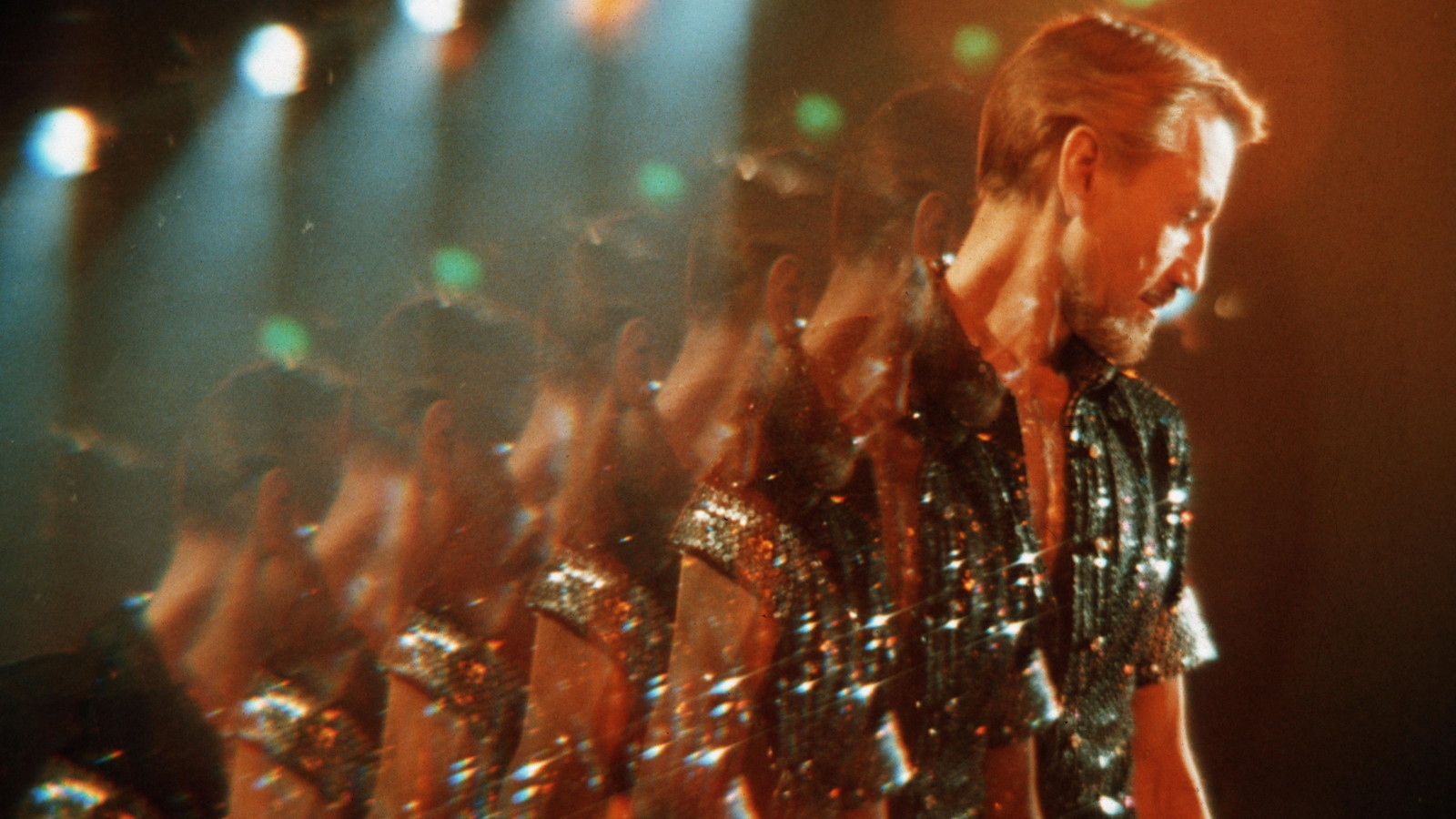
All That Jazz, directed by Bob Fosse in 1979, is easiest explained as a film that welcomes chaos. Whether it be the insane opening scene, which throws us as the audience straight into the jaws of Broadway and excites us with the fast pacing, snappy editing, the glitz, the glamour, the excitement... we are lost, instantaneously, never to return from the dazzle, which sticks to our perspective like an unwanted glue. 

The film shows us Joe Gideon, a flawed man from the very beginning, taking prescription and smoking like a chimney. He seems almost like the spirit of a lost man, floating around the stage, only given vitality by his “fans”, who are more often people only wanting to use the man for the sake of putting themselves in a better position than he... but this is only the beginning for Mr Gideon. 

We see his daily life. He struggles with his ex-wife and child, who both love him dearly and want to see him succeed and yet Gideon, consistently yet unintentionally, pushes them out. We see him direct his play, nothing comes together but he continues to fight until he has something that he deems Beautiful, only for his vision to be crushed by the money laundering scumbags in charge, whom we will come to dislike much more as the film continues. We see him go straight from here to editing his new film about a stand up comedian, specifically a scene featuring a speech about the five stages of death... “Anger, denial, bargaining, depression and acceptance”, the same five stages we will see Joe embark on through the film. 

We have no choice but to witness Joe at this point. His life and his intermittent thought trains, which we view through Gideon’s own mind as a dialogue with an angelic figure. We have grown attached to his character, despite his flaws, because in him you can see the spark of great passion.

As the film continues, the repetition of Joe’s life starts to become evident. The man is becoming burnt out, and this hurts us to see. He gives everything he has, and all of his ideas are turned down for the sake of money. One example is after Gideon shows his finally completed erotic airplane sequence, one of them says “There goes the kid’s audience”, and this will not do.
Similarly to other films of the struggling artist, the film doesn’t shy away from anything. It is a brave film, especially considering the fact that the film is semi-autobiographical, true to an extent of Fosse’s own experiences. If this film doesn’t make you question loving cinema, nothing else will. 

Finally, during a script reading, Joe begins to lose himself. His endless work has caught up to him. He is working himself to death, and has a heart attack. He awakes in hospital. This part is something truly terrifying, to me specifically, as I always try to work as much as possible, afraid to let time pass me by, and I can certainly see a potential future for myself in Gideon, which makes his eventual downfall all the more petrifying. “To live on the wire is life” says Gideon, implying that any time spent without risk is unimportant, an ethic that I certainly agree with. Gideon shares my perspective of pouring everything you had into everything you can, and seeing that place the character into such a situation makes All That Jazz one of the most startling films I will ever see.
This is where the film becomes a whole other beast. The surrealism starts to take the front seat, Gideon slips more into the aforementioned steps. He is now in denial. He plays around, he drinks like a fish, he continues to smoke, he flirts with nurses constantly... anything to distract himself from his poor condition.

Before the audience can blink, the next step is here, bargaining. Gideon tried to convince himself that he was going to be fine, but now he is startled by his gradually worsening state, and tries to wriggle his way out of it. Sadly, this doesn’t work out. He slips straight into the depression. 

We see Joe wander aimlessly around. He is a lost man entirely now. He becomes cynical to show-business, plagued by a 0/4 review from a stuck up critic on his now released film about a stand up comedian and now upon finding out that his play will be cancelled if he doesn’t finish it is a pushing point.

He is now nothing, his work is gone... so what does he have to live for? 

A wife and kid who look up to him despite his incredibly flawed persona? His “fans” who secretly despise him? Nothing... not even the studio care for him, as we see them excitedly chattering about how much profit they will make if Gideon should pass away.

Gideon reaches acceptance, and then comes the greatest ending in cinematic history. A speech that Gideon had come to know off by heart is now changed from a positive and charming introduction to a chilling “This cat allowed himself to be adored but not loved, and his success in show business was matched by failure in his personal relationship bag. Now, that’s where he really bombed... and he came to believe that work, show business, love, his whole life, even himself and all that jazz was bullshit.”

“To this cat, the only reality... is death, man.”

The character now rises, clad in a slick black suit and equally dark sunglasses obscuring his eyes. He smiled at the audience, a chilling, knowing smile of what is to come for Gideon.

“Let me lay on you a so-so entertainer, not much of a humanitarian, and this cat was never nobody’s friend, in his final appearance on life’s great stage - applaud if you want to - Mr Joe Gideon.”
The great, golden heads eerily turn to face Joe. The eyes fixate on him, just as they had before during his shows. These golden statues are as faceless as Gideon’s true fans in the film, and also have quite a resemblance to an award. The music chimes and candles are lit all around by the audience. Gideon appears, and starts furiously dancing, then slows.

Two women dressed in eerie body suits gracefully dance beside him as the score lifts, with beautifully swelling violin chimes. 

If Joe shall leave us, it will be with a gracious beauty.
He brings the microphone to his lips. 

“Bye bye life,
Bye bye happiness,
Hello loneliness,
I think... I’m gonna... die.”

He takes his time with these lines, and as he sings the final line once again as a faster speed and the songs tempo viciously increased, Gideon starts to twitch. His co star begins dancing, singing with Joe. He has finally reached acceptance, we realise, as he sings a gleeful song of the end of his own life. The editing becomes even more ferocious as we see the character dance, musicians joining in and Gideon accept what is coming. “I think he’s gonna die.”, they repeat. There is no escape now. 

“There goes his baby
With someone new...
She sure looks happy...
I sure am blue.” 

They sing, as we realise Joe’s girlfriend will move on from his death in no time. 

The chorus comes in again. He is a step closer, and at this point all we want is to see Joe feel the release of his death. The energy of the song and dance number continues to increase, the audience now starting to clap along.
“I’m through with romance
I’m through with love
I’m through with counting
the stars above.”
“Forget the stars!
And there’s a reason
Why’s he’s so free
His lovin’ baby...”
“She’s through with me...”

Gideon sings this line with a great pain, but continues to smile.

He runs into the audience, they adore him. They clap like they’ve never clapped before. They’re as cathartic as he is. He embraces the people in his life.

“This must have cost a fortune!” applaud one of his producers, finally accepting his work. 

He hugs his daughter, and gently touches his wife’s face as he says “At least I won’t have to lie to ya anymore!”, Gideon has found his freedom. He feels forgiven in his final moments for all that he has done.

One final chorus, the audience screams and applauds, the singers scream, the dancers spasm, the musicians play their hearts out, before the final couple of lines calm everyone down. Gideon is raised above everyone else by a small podium, and all goes silent, other than Joe’s final lines, “bye bye, my life, goodbye”, until one more great round of applause and a musical riff.

Gideon now floats to his death, into the light which is personified by the angelic woman we have seen him speaking to all this time. 

A harsh cut flies out of nowhere and we see Gideon. A doctor zips up his body bag, in silence. The shot lingers for a few seconds, and as we zoom in on Gideon’s body, There’s No Business Like Show Business By Ethel Merman begins to play.

“There’s no business,
Like show business,
Like no business I know!
Everything about it is appealing!
Everything the traffic will allow!”

These final excitable screams define the new generation, who see show business as just what the lyrics describe, but they have been fooled. Show business will eat you up and spit you out at a moments notice.
All That Jazz works so brilliantly because there are no true victims in it. Sure, most of the characters are sympathetic, but none of them are exactly angels, even Joe’s daughter, who we see gradually become more and more corrupted by the people surrounding her as the film goes on. Gideon isn’t victimised, we may feel empathy for him, even some sympathy, but we do not love him as a person, we love the idea of him - a greatly productive man who stood at nothing to produce his art. 

If Gideon’s tale is one to end up true to myself, then maybe my great fears for the future are finally justified.

Thursday, April 12, 2018

Kes (1969)


By Reece Beckett

The following essay contains spoilers for Kes.

“Kes! C’mon Kes, c’mon lass!”

In Britain, just as the 1970’s were on the horizon, Britain was a little behind in the times. It wasn’t until the 1980’s that things really started to switch, and in that case, they certainly didn’t go well, making way for skinhead gangs and brutality, which has only continued since, even to present day. In 2017 Britain, I, being only fourteen at the time, watched Kenneth Loach’s 1969 film, Kes.

Kes centres around a young boy in a lower class family, who finds a great freedom and love when he stumbles across a Kestrel and begins to train it. I believe that’s something we can all relate to, we all had our own hobbies, our own freedoms as a child. They’re what every child needs, an escape from the burden of school and a home life, a freedom. Kes, in this film’s case, is that freedom.

We see Billy Casper out on great fields, as Kes glides through the air with no troubles, elegantly. Kes can fly away at any time, she has that freedom, yet Billy can only long for it. As the tagline of the film states: “They beat him. They deprived him. They ridiculed him. They broke his heart but they couldn’t break his spirit.”. Despite the fact that Kes is a huge part of Billy’s spirit as the film progresses, and her harsh departure at the hands of Billy’s cruel older brother, Jud at the end of the film would surely break any typical young man, Billy Casper is not any typical young man. He has been forced to grow up surrounded by hassle, he has become numb to it whether it be from his uncaring teachers, his menacing brother or his harsh schoolmates, and this has toughened him to a point wherein he can bear the death of his one true friend in the awful world he lives in.

I don’t think you could see much post-1970 cinema without seeing the ripple effect that this film had on British film, and British culture in general. You can see little bits of Kes everywhere, and no that isn’t a pun related to the bird’s unfortunate death. Look at, for instance, some of the films of Terence Davies, particularly his early career. His short film trilogy, which painted a startling picture of the director’s own childhood in Children, and then went on to seemingly predict his own future, is as startlingly honest and stark as the Loach film, as are some of Davies’ later features, particularly Distant Voices, Still Lives (1988) and The Long Day Closes (1992), both of which present realistic, yet more poetic and visually focused than Kes, views of British family life.
Kes, shot much like a documentary at times, (it reminds me greatly of Allan King’s documentary style, of a fly on the wall whilst still being able to feel incredibly intimate), feels so personal - maybe because we can all see ourselves in it to a certain degree, maybe because of the realistic and carefully constructed performances, or maybe out of pure nostalgia. Whilst you can’t go far into British cinema without spotting Kes’ influence, I’ll bet you also can’t show many Brits this film without having one of them say “that’s happened to me!”, especially when it comes to the somewhat comedic football game at Casper’s school, where the PE teacher seems to think he’s Gary Lineker. 

Kes is, quite clearly, one of the key films to the British Kitchen-Sink Realism Wave, and one of the most favoured almost 50 years later. The film looks at the state of current affairs in the late 1960’s, and seems to be against them to a certain degree. We can see, quite clearly, that the young Kasper is neither physically or mentally fit for a working environment yet (this is emphasised further when he arrives late to his job interview, too), he has a lot of maturing to do, and yet there is a pressing force throughout the entire film that tells him he must find himself a job, for the sake of his family. It’s not the future that Casper wants, made evident by his occasional moaning about it, and I don’t believe that it is the future that Loach wanted for the boys of Britain at the time, either.

Of course, Loach would go on to many, many more political films as his career continued, notably his most recent film, I, Daniel Blake (2016), which certainly has a few things to say about the state of the country financially and how he feels it should be fixed. Loach is a man unafraid to show what he truly thinks, a brave character who will share his stance and doesn’t care what others may think of it. Even if you don’t agree with him, I dare you to say that he doesn’t care for the country, and even now, almost 50 years later, Kes may still be his most passionate, most caring and most tender film to date.

Monday, April 9, 2018

We Need to Talk About Kevin (2011)


By Saša Avramović

This film directed by Lynne Ramsay (Ratcatcher) was greeted mostly with standing ovations from audiences and praise from the critics at the festivals where it was shown. It is mostly better than the products usually served at similar events, but not so much to call it a masterpiece - the word that many rushed to use while describing it. On the contrary, it's far from that.
The film follows Eva (Tilda Swinton), the mother of Kevin (played by Ezra Miller, Jasper Newell, and Rocky Duer in various stages of his life) who has committed a terrible crime and is now in jail. The film follows her struggle with inner demons and relations with the outside world, as her recollections of her former family life when she was trying to establish a normal relationship with an impossible child.
Another in a series of films about evil children, 'We Need to Talk About Kevin' tries to be anti-thriller, drama, and horror at the same time and to say some important things about the problems of the modern world, in this case about mass murders in schools of the United States. It doesn't fully succeed in any of the self-assigned tasks. When it comes to the thriller aspect, the entire film is set as an anti-thriller. Very soon after the beginning of the film the future of the main characters is revealed, the tragedy has already happened and the perpetrator is known. We see the flashes and the scenes in which survivors of the tragedy appear. That's a valid method but it doesn't work here because of the mild treatment from the director. The main function of that anti-thriller frame was to bring us closer to the characters, to both the victims and the ones responsible for the tragedy, to their drama and life. Sadly, the film failed in that area. We don't fully believe it, most of it isn't convincing at all and it doesn't bring us closer to the characters.
Here the director asks some simple, but (some would say) important questions: was Kevin born bad, was it all about the family influence, or perhaps both? The fact is that the mother was not happy because of the birth of a child. All that translates to Kevin during an early age and he uses every opportunity to turn her life into hell. The director settles for the option - born bad, and the environment made him even worse. So, he is set on the wrong track from the very beginning, and the behavior of his mother in the beginning (and later his father, but in a different way) form his personality. Kevin is evil and a manipulator. Even when it seems that he established a normal relationship with his mother, the next event shows us that it was only an illusion, and part of his game. He behaves completely differently around his father (John C. Reilly, in a very weak role) and the father does not believe his mother when she blames Kevin for various violent acts - he kills his sister's hamster, and in the end, blinds his sister in one eye. This part of the film has a big problem because the director decided to present the characters and their relationships in black and white manner. In essence, the most problematic thing is the way Kevin's eeeeevillll is represented, the claim that he is the main cause of all problems, and the way his family responds to his acts. Without going now into the ideological and moral implications of this deeply disgusting perpetual blaming of the children as the root of all problems (a very common thing in cinema), let's try to play by the director's rules (with an emphasis on "try"). Relations between the characters are very simplified and subordinated to the director's intentions. Father always acts confused, is not aware of Kevin's actions, and always complies with him. If Kevin is evil, then his mother is always nice to him, even though at first she did not want to have a child. She always attempts to get over all his wrongdoings. But it seems that Kevin doesn't believe in her love, he is convinced that deep down she hates him. In one scene, when he intentionally dirties his diapers (he wears diapers only to annoy his parents, not because he needs them) she angrily pushes him and he breaks his arm. Before this flashback, in prison, in a scene set in the present, he says to his mother that this action of hers is the only honest thing she had ever done to him. Kevin is wrong because she immediately shows remorse for her action and stays with him until his arm is healed. That much proof of his hatred toward his mother is unnecessary. The director does everything so that we as viewers feel uncomfortable because of Kevin's actions, but I felt uncomfortable mostly because of the way Kevin's acts were represented, and most of it is completely unnecessary. It's pure grotesque, and a simplified quasi-psychological portrait of the genesis of the main problem.
The director also wanted to play with a horror genre in this film, but it's not functioning, again largely connected with the previously described problems of the weak writing and the portrayal of the characters and because of the director's lack of understanding of the possibilities of the genre. Kevin's actions as a child are not truly creepy nor were directed in a horror key, and in the end, everything becomes pure exaggeration and almost funny in its failed seriousness (I can imagine how the actors who play little Kevin were directed: "Okay, now lower your brows and look evil!"). In the beginning, there are a few interesting scenes. The scene of the bathing in tomato juice in the crowd is effective because it shows Eva's current freedom with hints of future events. There is a partially effective scene of childbirth, during which we see only Eva's horrifying reflection in the mirror, then after giving birth we see her in a catatonic state in the bed with her husband holding the baby. In the scenes taking place in the present, the director is satisfied with the repetition of actions that should leave an unpleasant and uneasy impression on the audience, and this applies in particular to the scenes of Eva's attempts to cope with the new situation after Kevin's crimes - Tilda Swinton is excellent in some scenes, but in multiple scenes, she slips into pathetic - this part of the film is unconvincing because it should be shorter and less repetitive. Eva is constantly taking off red paint thrown onto her house (okay, you made your point, we understand the symbolism and we don't need to see the color red in every single scene of the film). The director wanted to make sure that we see Eva's character as a victim too, and she made that point aggressively. Eva accepts insults and slaps on the street without question and moves on. The almost identical scenes showing her loneliness begin to annoy her after many repetitions. In fact, in this film, there is no real human drama or horror, only at moments some effective scenes, with a lot more redundant ones. The director wants to show us the victims of the tragedy and their suffering, but there are not many of these scenes. The crime that Kevin commits is shown in a way that Kevin sees it as the fulfillment of some kind of messianic fantasy, but the scene remains sketchy and incomplete. When it comes to the actors who play Kevin, the best one is Ezra Miller as Kevin the teenager, who occasionally manages to show a tangible threat. Tilda Swinton is an excellent actress but she didn't impress me much here, she is mostly playing the same flat type of character and going with the flow of the script.
The film doesn't say anything new and important about these horrific crimes. As a study of the relationship between parents and children, the film is weak and one-dimensional. Also, it doesn't say anything new about human rights and choices in life. Eva at first does not want a child, then she changes and struggles with the problems, but it is all shown in a black-and-white manner and the end, leaves us almost cold. The very end of the film is effective but does not help much with the overall impression.

Monday, April 2, 2018

The Squid and the Whale (2005)


By Reece Beckett

This review may contain spoilers.

Frank: Me and Mom versus you and Dad.

The Squid and the Whale is a film that feels almost like an 80 minute emotional assault, in all of the ways that you would want a film to. It's the dramatic tension between the characters that is instantly hooking. The entire film feels  like a game of tennis, which is ironic seeing as that is the sport that all of the characters participate in at some point in the film. The opening scene probably expresses this idea in the most upfront way, with the family playing tennis themselves. Walt and Bernard vs Frank and Joan, the net acting as a wall stopping them from really clashing. They hit the ball back and forth, until Bernard remarks to Walt that he should hit the ball at his mothers back hand, as it is weaker. The idea of specifically aiming for a weakness, even if it is 'just a game' (as Walt says), still says a lot about the characters. 
The moment that always sticks out to me is the ending, which may be my favourite ending of this century so far. As soon as Lou Reed's Street Hassle starts to play, the cello gently screaming out and hitting the audience in the gut with its raw feeling, it's impossible not to have shivers all over your body, and it was as I started to tear up, the credits rolled and I sighed, realising how truly special this film is for my fourth time. It's the performance from Jesse Eisenberg, the almost documentary-like cinematography and Lou Reed's brilliant song that make this moment one of the most emotional and most memorable that I have ever seen. 
One aspect of the film that I certainly deem note-worthy is the characters and their actions. The like-ability of the characters is something that Baumbach really plays around with. I find his confidence incredible, with the way that he gives all of the characters unlikeable moments, but he realises that they are fleshed out and human enough for the audience to simply understand their actions. My favourite example of this is a moment that comes towards the end of the film, when the entire family finally clashes and the emotion is let out. Bernard says to Joan that if he had tried a little harder, he thinks he could have saved the marriage, and then he asks if they could try one more time to fix things, and it's her almost instant outburst of laughter that really solidifies Baumbach's confidence in his characters and his confidence in the actors.
I find it interesting how the film is titled after what is seemingly insignificant, and doesn't seem to represent the film, The Squid and the Whale. Of course, the title refers to the closing moments of the film, wherein Walt's character arc is fulfilled by him confronting his fears and coming to realise how wrong he has been throughout the film, but I think that it represents more than that. For one, if you see the actual part of the exhibit that The Squid and the Whale is, you'll know that it almost looks like strangulation, the squid wrapping its tentacles around the Whale, and I find that this represents how the characters feel in the film. They feel as if they're being strangled, as if they're suffocating, the family tension is simply dragging them down, which leads to the divorce in the first place. It could also be a representation of the way that the family seems to be split into two parts, Walt and Bernard being one and Joan and Frank being the other. The way that Bernard seems to be overbearing, or in a way suffocating towards his family, pressuring them, especially Walt to be the same as he is. It could also represent the way that the two are fighting, whether it is Bernard Vs Joan or Walt vs Frank, they all have their tension involved at times and this feels strangulating too. 
The most noticeable emotion throughout the film is anger, with the way that all of the characters seem to be angry with each other at one given point, but never truly express it. Walt seems to be the one who is the most annoyed in the film, annoyed with himself, his mother, his brother, his girlfriend and eventually his dad (when we get to the end of the film). It's all of his pent up anger that I would say leads to the finale of the film, when he finally starts to cry in front of his dad, he lets that anger and frustration out, and he stands up to his dad, telling him that he won't go and see him for a little while. He then does something for the first time in the film, he goes against what his father has told him to do, and leaves (shortly after being asked to stay for the day, as Bernard says he 'needs the company'). 
One thing that I found very interesting was an interview with Jeff Daniels, who gives potentially the greatest performance in the film playing Bernard, the self obsessed and narcissistic father. In the interview, he stated that "The Squid and the Whale was the film that saved my film career.", and that it came after a few failures in a row, and just when it seemed as if Daniels' acting career may be over, director Baumbach went to him and cast him to play Bernard. I find it rather ironic that the best actor in the film was the one who was struggling the most to find any work at the time, and I'm sure that he's as thankful as I am for the fact that he was cast in this film.
Another thing that I find to be unique to this film is the way that it really wears it's time setting as much as it can. From the use of Pink Floyd's Hey You to the clothes and cars in the film, the film doesn't throw it in your face with a time stamp every few minutes but instead simply allows the audience to figure it out, and though it doesn't add all too much to the story beyond some context and reasoning for certain things to be included, it makes the film feel more personal in a strange way.
The film is one that I find myself heavily relating to, especially in the character of Walt. Walt is a character who seems to be entirely lost in what he wants. He thinks that he can do better than his girlfriend, he thinks that he 'could have wrote' Pink Floyd's 'Hey You', he feels that his fathers opinion is far more important than finding out for himself. It's the admiration for his father that I would say I used to share. When I was younger, my dad meant the world to me, even after my parents divorced, eventually (much like Walt) I came to realise that in reality, it was my mum who was always there when my dad wasn't, which was very often, and that he wasn't that great at all. It's a tough thing to get over, almost like if you were to meet your hero only to find out that they weren't who you thought, but at the same time I feel it's something that many people have gone or will go through. I suppose in a way I also relate to Walt's pretentiousness, as all of you reading this will know (unless this is the first thing you've read by me) I'm really pretentious for a fourteen year old kid, and I'm still trying to figure out if that's a good thing, or if it's as negative as I tell myself. 
Either way, Noah Baumbach's confident film blossoms whilst the characters involved seem to gradually deteriorate, due to excellent performances and sharp, incredibly witty script. It's a film I find myself rewatching very often, and I'm sure it's a film that I will always hold a spot in my heart for, as long as when you say 'heart', you're referring to my favourite films list.